
Events
Tasting Music: Bartók Piano Quintet in C
6/12/26, 6 PM — Pepper Bridge Winery
WWCMF will add your name and the number of tickets you purchase to the concert guest list. We will NOT send physical tickets.
Doors open one hour before the performance.
Doors open one hour before the performance.
Béla Bartók (1881–1945)
Piano Quintet in C, Sz. 23 (1904)
I. Andante
II. Vivace (Scherzando)
III. Adagio –
IV. Poco a poco più vivace
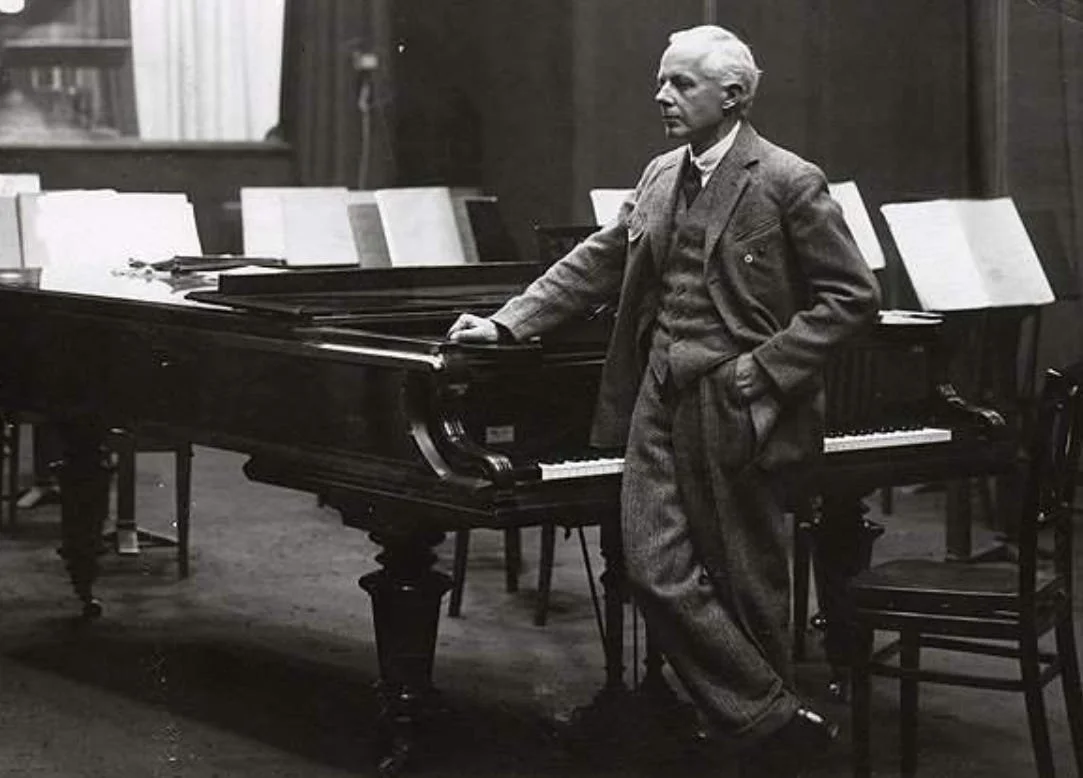
Béla Bartók is a composer of contrasts. He is also the composer of Contrasts, a work for piano, clarinet and violin heard at such Festivals as this one waaaay back in 2009. (It is known that here at WWCMF we don’t like to repeat pieces all that frequently, so rich and varied is our repertoire. Maybe after 17 or 18 years it’s high time to revisit the piece!) Immediate digression aside, contrast defines Bartòk’s legacy. He was a collector and curator of ancient folk music passed down by generations through oral tradition and simultaneously an innovator who personified the spirit of experimentation associated with the 20th century avant-garde. A prodigy, Bartók gave his first public performance at the age of 11 and fittingly included his very first composition, a solo piano work titled “The Course of the Danube.”
The ‘course of the Danube’ serves as quite the metaphor for the early Piano Quintet in C. Composed in Germany in 1903 – 1904, premiered in Vienna, Austria and redolent of melodies and rhythms from Slovakia, Hungary and Romania, the Piano Quintet winds its way through Europe like the Danube itself in an ever-shifting swirl of Johannes Brahms, Richard Strauss and something new, hints of folk modernism and a premonition of the Night Music style that would haunt Bartók’s mature compositions like Music for Strings, Percussion and Celeste, Concerto for Orchestra and Third Piano Concerto, masterpieces all. Join us as we go to the source: C major, no sharps or flats, the white keys on the piano. At least, it ends that way. Along the way we’ll explore all the black keys, too, and even tune our string instruments down a half-step midstream to get that authentic Hungarian folk sound. In addition to great music, Hungary is also known for its variety of peppers and distinctive wines. Thus, we will feel right at home at Pepper Bridge Winery, a WWCMF favorite these many years.
Artists: Winston Choi, piano; Timothy Christie, viola; Norbert Lewandowski; cello; Philip Payton, violin; MingHuan Xu, violin
Tasting Music: Ysaÿe Sonata in A minor for two violins, Op. post
6/19/26, 6 PM — Seven Hills Winery
WWCMF will add your name and the number of tickets you purchase to the concert guest list. We will NOT send physical tickets.
Doors open one hour before the performance.
Doors open one hour before the performance.
Eugène Ysaÿe (1858–1931)
Sonata for Two Violins in A minor (1915), Op. post.
I. Poco lento, maestoso - Allegro fermo
II. Allegretto poco lento
III. Finale. Allegro vivo e con fuoco
Queen Elisabeth was something else. No, not Queen Elizabeth II of the United Kingdom. The Belgian one, as in, the prestigious Queen Elisabeth competition. Belgian Queen Elisabeth was not only a great patron of the arts whose impact extends to this very Festival (frequent WWCMF Artist, Henry Kramer, is a competition laureate), but also a humanitarian who pursued the cause of social welfare with unparalleled zeal. She also made time to practice the violin, which is where her tale intersects with WWCMF’s Tasting Music III.
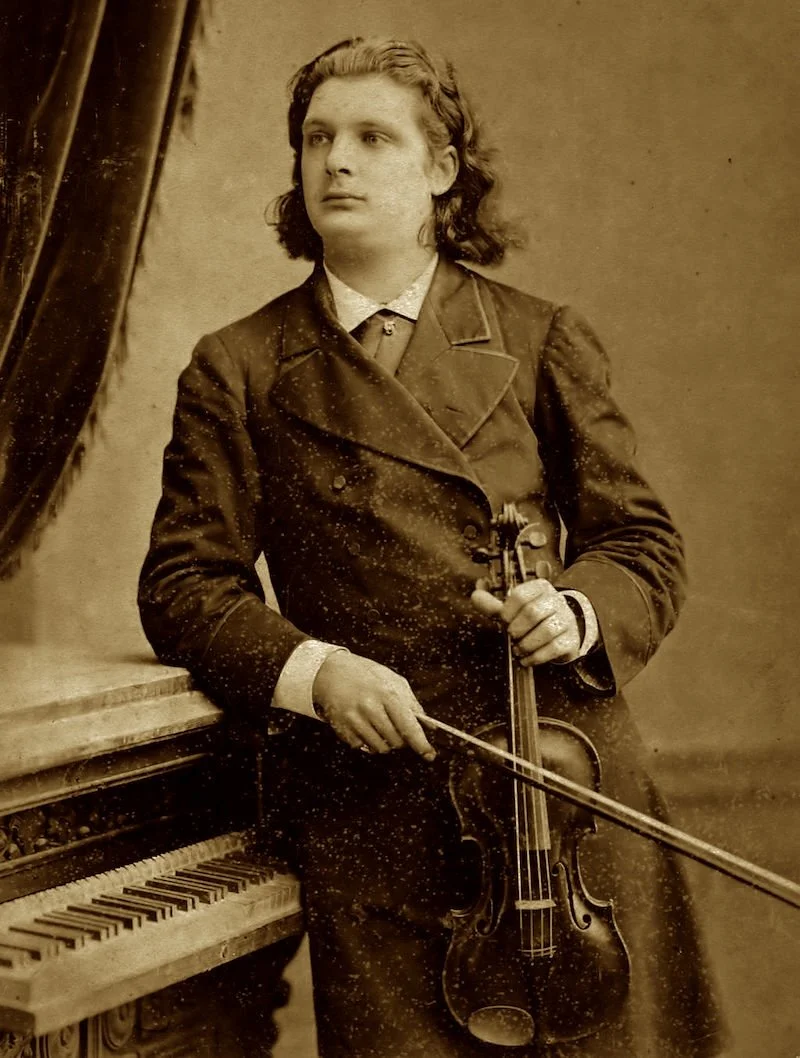
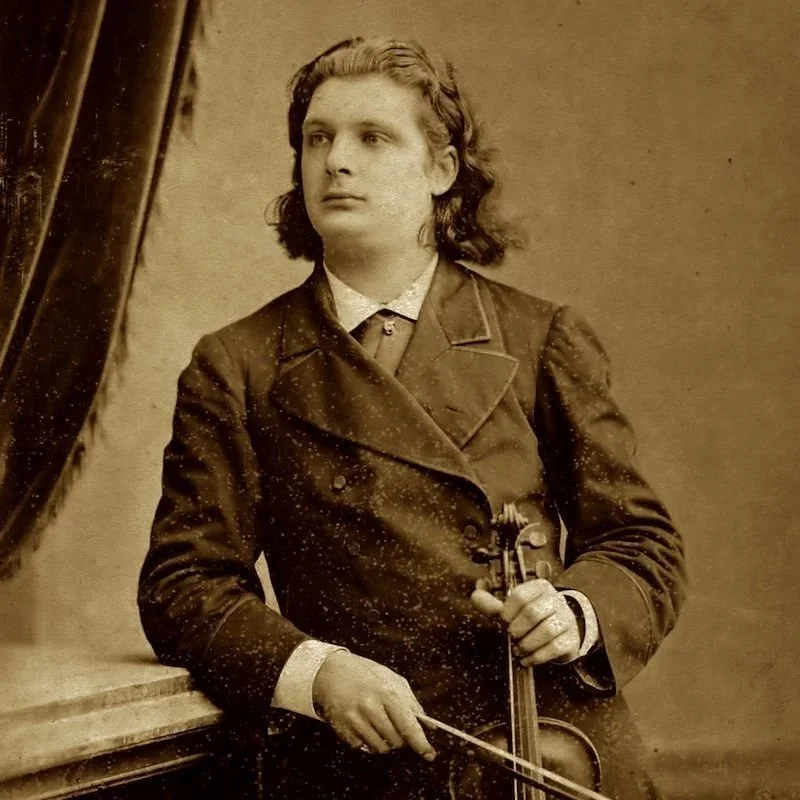
In 1915, Queen Elisabeth commissioned Belgian violin virtuoso Eugène Ysaÿe for a sonata for two violins. She was to learn and perform the new piece with Ysaÿe himself. Ysaÿe was a musician who approached composition through the lens of his own prodigious violin technique. His Six Sonatas for Solo Violin rank among the most technically difficult pieces in existence for the instrument. His intimate knowledge of the violin opened up new possibilities and pathways for both devilish technical display and deep emotional expression.
The question is, did he temper his tendency toward violinistic fireworks to give the Queen a fair shake at playing it? The answer is, no, he did not. Both violinists are tested with the same dizzying array of challenges as any of the Six Solo Sonatas, only more difficult due to the demands of intricate coordination between two players. Queen Elisabeth was content to bear the work’s dedication, and there was no evidence she bore any resentment toward Ysaÿe’s audacity. She wasn’t that kind of Queen. That is to say, his head remained attached to his shoulders. In truth, Ysaÿe was Elizabeth’s violin teacher. After his passing in 1931, his widow Jeanette Dincin Ysaÿe continued to teach the Queen.
Which brings us to tonight. Prepare to be wowed. From a single trembling line to a veritable wall of sound, the Sonata for Two Violins in A minor is certainly fit for royalty. Solo becomes Duo. Duo becomes Trio. Trio becomes Quartet. Such is the complexity and the sheer labor of love embodied in this music. WWCMF Royalty, violinists Christina McGann and Stephen Miahky, make a triumphant entrance to the production facility and barrel room of Seven Hills Winery.
Artists: Timothy Christie, moderator; Christina McGann, violin; Stephen Miahky, violin
Tasting Music: David Schiff, Vineyard Rhythms
6/26/26, 6 PM — Reininger Winery
WWCMF will add your name and the number of tickets you purchase to the concert guest list. We will NOT send physical tickets.
Doors open one hour before the performance.
Doors open one hour before the performance.
David Schiff (b. 1945)
Chamber Concerto No. 2 for Violin and String Nonet: Vineyard Rhythms
I. Hawk (winter to spring)
II. Gaia (spring to summer)
III. Harvest (fall to winter)
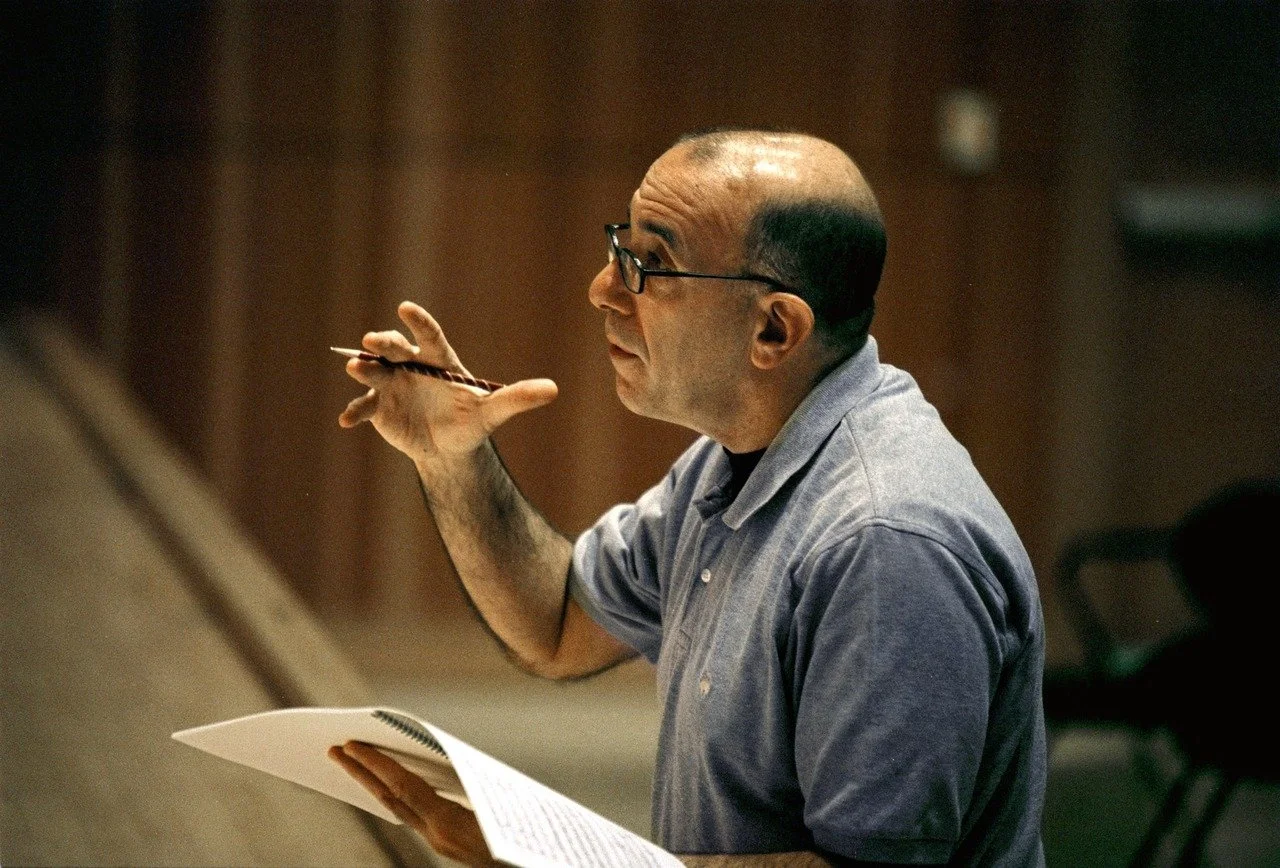
It began in a winery, not unlike this very Festival. Susan Sokol Blosser of the eponymous Willamette Valley winery in the Dundee Hills approached the composer David Schiff to compose a piece to honor her mother, a violinist, and the vineyard she so loved. David accepted, and tonight we give the Washington premiere of his work, Vineyard Rhythms. The piece portrays the annual cycle from hibernation to harvest, known to viticulturists the world over.
“In the vineyard, time is circular. The vines stay put and the seasons flow effortlessly, one into the next, weaving a multicolored, multilayered tapestry. Like the vineyard, we are the same person year after year, but we each have our own season of hope, of growth, of maturing, of inactivity or withdrawal, and then of renewal. The vineyard is my metaphor for life.”
— Susan Sokol Blosser
It’s always important to taste outside of one’s own AVA, and we’re delighted to welcome some musical Pinot Noir to the Walla Walla Valley for this performance.
Artists: Natasha Bazhanov, violin; Timothy Christie, viola; Artur Girsky, viola; Norbert Lewandowski, cello; Christina McGann, violin; Stephen Miahky, violin; Vanessa Moss, violin; John Popham, cello; Maria Sampen, violin; Joshua Skinner, double bass
Tasting Music: Mozart Piano Quartet in E Flat, K. 493
6/5/26, 6 PM — Foundry Vineyards
WWCMF will add your name and the number of tickets you purchase to the concert guest list. We will NOT send physical tickets.
Doors open one hour before the performance.
Doors open one hour before the performance.
Wolfgang Amadeus Mozart (1756–1791)
Piano Quartet No. 2 in E Flat, K. 493 (1786)
I. Allegro
II. Larghetto
III. Allegretto
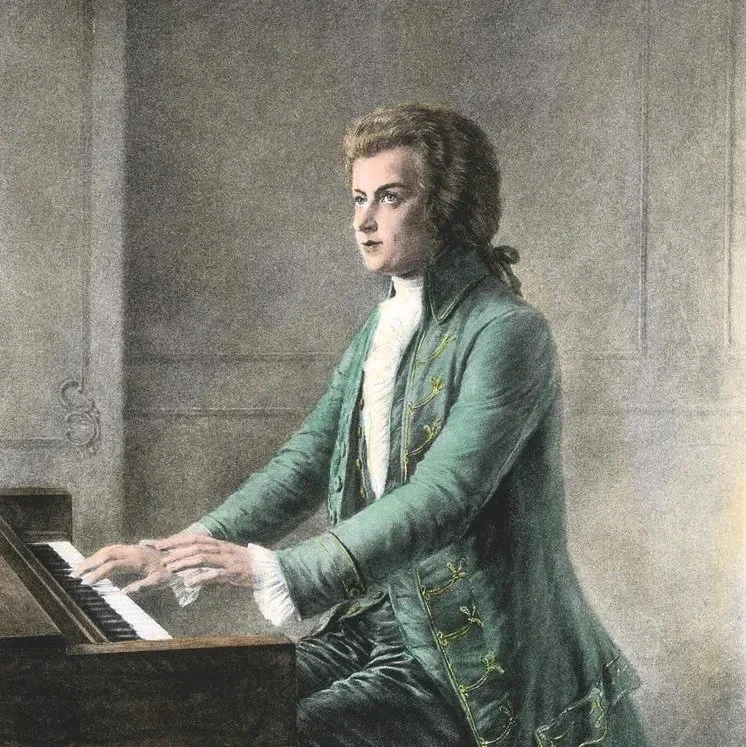
In June 2025, WWCMF celebrated the 240th anniversary of Mozart’s Piano Quartet in G minor, K. 479 (1785), a stormy affair that eventually finds its way to a joyful conclusion. Therefore, in an uncontroversial example of “equal time,” we now celebrate the 240th anniversary of the G minor’s younger sibling, the Piano Quartet in E flat, K. 493 (1786). Mozart completed K. 493 a few weeks after putting his John Hancock on a little number called The Marriage of Figaro (K. 492!). Therefore, we can be confident that Mozart was squarely in the full bloom of artistic maturity, even as he faced polite society with conspicuous immaturity. We hear the influence of Mozart’s famous opera just five bars into the quartet, echoes of Figaro teasing young Cherubino in the Act I aria, Non più andrai farfallone amoroso (“You shall go no more, lustful butterfly, Day and night flitting to and fro; Disturbing ladies in their sleep…”). No more chasing girls. Time to buckle down and write a piano quartet.
Before the G minor, there had never been such a thing as a piano quartet. The piano trio (piano, violin, and cello) was a well established form and duly considered a beautiful and fertile instrumental combination. How to make this successful combo even more compelling? Elementary. If you want to dial beauty, excitement and substance up to ’11,’ just add a viola. Hence, the piano quartet was born.
Only, “not so fast, my friend,” said Mozart’s publisher, Franz Anton Hoffmeister. Hoffmeister had commissioned three such works from Mozart only to pull the plug early on. He declared the G minor too difficult to play. Sales, he believed, were soft due to the technical demands placed upon the pianist in particular. Indeed, both of Mozart’s Piano Quartets require virtuoso players. We’re in luck that Mozart decided to compose K. 493 anyway. And we’re in luck that virtuoso pianist Oksana Ejokina returns to WWCMF to carry the day along with Festival mainstays Maria Sampen (violin), Norbert Lewandowski (cello) and Founder & Artistic Director, Timothy Christie (viola). Happy anniversary K. 493! 240 years old and still as fresh as the day the ink dried.
Artists: Timothy Christie, viola; Oksana Ejokina, piano; Norbert Lewandowski, cello; Maria Sampen, violin